Rice Flour vs. Glutinous Rice Flour: Read the Bag
- What is the difference between rice flour and glutinous rice flour?
- What should you look for on the bag?
- Why can the two flours behave differently?
- Are mochiko, shiratamako and joshinko the same thing?
- Can you substitute one for the other?
- Does “glutinous” mean it contains gluten?
- How should you handle the flour before cooking?
- What should go on your final shopping list?
- Sources
What is the difference between rice flour and glutinous rice flour?
Regular rice flour and glutinous rice flour are different ingredients, not interchangeable names. Glutinous rice flour comes from sticky rice and is also sold as sweet rice flour; “sweet” does not mean sugar has been added. Match the flour to the recipe's exact wording, check the current ingredient and allergen labels, and do not taste raw flour or uncooked dough.
This is a label-reading guide, not a tested recipe or a product ranking. It compares manufacturer descriptions with Japan's Ministry of Agriculture, Forestry and Fisheries (MAFF) explanations of rice-flour types. The useful question is not which flour is better: it is which bag the particular recipe actually requires.
What should you look for on the bag?
Start with the complete product name, then turn to the ingredients. As a concrete comparison, Bob's Red Mill lists white rice as the ingredient in its White Rice Flour. Its Sweet White Rice Flour lists sweet white rice and describes that rice as glutinous or sticky. The manufacturer says the latter is not sweet like sugar.
These are examples from two specific products, not a promise that every bag with a similar front label contains the same thing. A flour blend or dessert mix needs its own ingredient check. Keep the distinction between an ingredient name and a finished-food name: buying a mix is a different decision from buying the single flour specified by a recipe.
Use this three-column shopping note:
| Record | Copy this information | What it helps you decide |
|---|---|---|
| Recipe wording | The full flour name, including “sweet” or “glutinous” if present | Whether the requested type matches the bag |
| Package identity | Product name, ingredient list and any product-specific recipe reference | Whether this is that flour or a mixture |
| Dietary check | Allergen information, relevant claims and any unresolved manufacturer question | Whether the product fits the eater's requirements |
Do not record only “rice powder” in your shopping list if the recipe is more precise. That shorthand removes the very distinction you need at the shelf.
Why can the two flours behave differently?
MAFF's explanation of milling and rice-flour characteristics distinguishes non-glutinous rice from glutinous rice and identifies starch composition as one factor affecting behavior. It also explains that milling damage to starch affects dough softness and water requirements, while particle size affects the texture of the finished food.
That gives two separate reasons to resist a casual substitution. The rice type matters, and processing matters too. Sharing the words “rice flour” does not establish identical performance. Even within a named type, the recipe's recommended product or processing description can be useful information.
Our practical recommendation is to keep the author's specified flour for the first attempt. If it is unavailable, use a complete recipe written for the flour you can obtain, or an explicit substitution supplied by that recipe's author. A general claim that two flours both thicken does not provide a tested replacement quantity or cooking method.
This applies to noodle projects as well. Our noodle-type guide helps distinguish finished products; a noodle's appearance is not enough evidence to reconstruct its flour formula.
Are mochiko, shiratamako and joshinko the same thing?
No. MAFF's rice-flour classification places joshinko, written 上新粉, under non-glutinous rice. It places mochiko, もち粉, and shiratamako, 白玉粉, under glutinous rice, but describes different manufacturing routes for them. Shiratamako is not simply another spelling of mochiko.
Treat those names as useful distinctions, not as permission to substitute one for another. If a Japanese recipe specifies shiratamako, preserve that word in the shopping note. If an English-language recipe specifies sweet rice flour and identifies a particular product, retain that information too.
This small Japanese terminology map is not a naming system for every regional cuisine. A translated package or recipe may use different descriptive wording. When the relationship is unclear, consult the recipe author or product maker instead of inferring an equivalent from the finished dish's photograph. The rice-grain guide covers a related but different decision: choosing whole grains rather than flour.
Can you substitute one for the other?
Do not assume a one-for-one swap. Neither the ingredient name nor a matching weight establishes that the result will meet a recipe's intended texture. This guide supplies no universal replacement ratio because the sources reviewed do not establish one across dishes.
Here is an original shopping exercise, not a cooking formula. Imagine these three lines copied from three separate, otherwise complete recipes:
- Recipe A: 120 grams regular white rice flour.
- Recipe B: 120 grams sweet rice flour.
- Recipe C: 90 grams regular white rice flour plus 30 grams sweet rice flour.
Each line totals 120 grams, but they describe three different purchases. A calls for one type; B calls for the other. C calls for both, with regular flour contributing 75 percent of the flour weight and sweet flour 25 percent. Replacing C with 120 grams of either single flour preserves the total weight while changing the ingredient specification.
The exercise illustrates label matching only. Those quantities have not been tested as a dough, and no water amount, cooking time or finished yield is implied. For actual cooking, use the complete recipe's ingredients, method and food-safety instructions.
If the shop has only one type, the next decision is straightforward: find the specified ingredient elsewhere, obtain an author-approved alternative, or choose another complete recipe. Do not buy the wrong flour merely because the package size looks convenient.
Does “glutinous” mean it contains gluten?
The name refers to sticky rice, not an added wheat ingredient. However, the flour's name alone cannot establish suitability for a person with celiac disease or a food allergy.
For FDA-regulated foods sold in the United States, a gluten-free claim must meet the FDA's conditions, including less than 20 parts per million of unavoidable gluten and restrictions on ingredients. That is a specifically scoped labeling rule, not a worldwide guarantee attached to all rice flour.
Check the actual product's current label and relevant cross-contact information. Gluten-free is not the same as free of every allergen. The FDA explains that advisory allergen statements are voluntary; absence of a “may contain” statement does not establish absence of cross-contact. If information is unclear, ask the manufacturer before using the product for someone with a dietary restriction. Consult an appropriate healthcare professional for individual dietary needs, and follow applicable local labeling and food-safety guidance.
How should you handle the flour before cooking?
Do not taste either flour, raw batter or uncooked dough. The FDA's flour-handling guidance explains that most flour is raw and processing does not eliminate harmful bacteria. It also advises against attempting home heat treatment to make flour safe to eat raw. Follow the exact package and complete recipe's cooking directions; this comparison does not replace their temperatures or times.
Keep raw flour away from ready-to-eat food. After handling it, wash hands with soap and water and wash bowls, utensils and work surfaces with hot, soapy water, following CDC guidance. Do not let children play with dough containing raw flour.
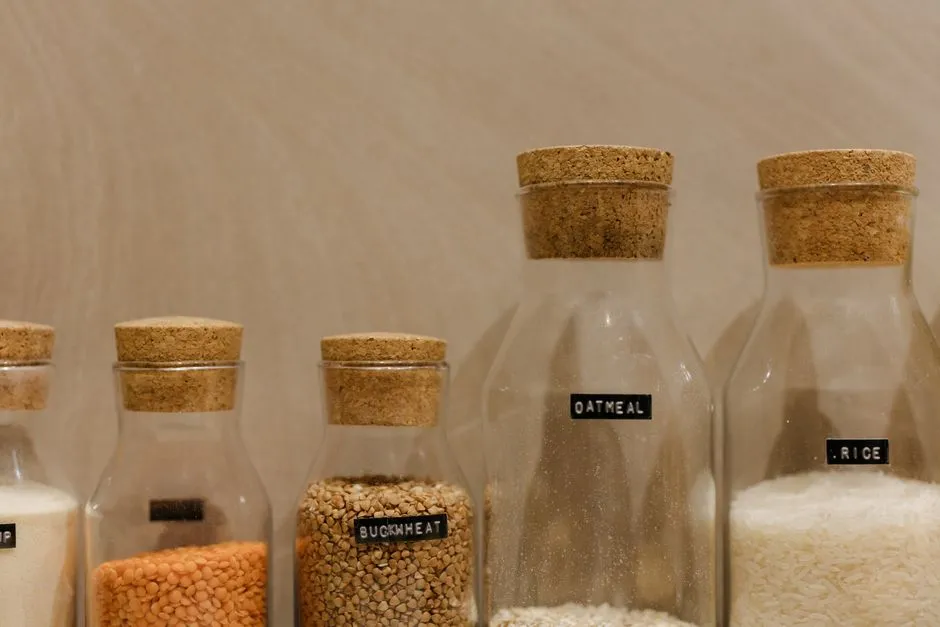
For pantry organization, our editorial suggestion is to retain the original package information if you use an outer storage container. Keep the full flour name, lot details and storage instructions available rather than reducing the label to “rice.” Follow the package's storage directions; this article assigns no generic shelf life to every rice flour.
What should go on your final shopping list?
Write down the recipe, exact flour name, required amount and any specified product. Add a separate dietary-information check rather than assuming the flour name completes it. For a recipe using both types, put both on the list with their individual weights.
A useful final question is: “Can I point to the recipe line and the corresponding package information?” If not, resolve that gap before buying or cooking. Our pantry-building guide takes the same recipe-led approach to choosing a manageable set of ingredients.
Sources
- Bob's Red Mill: white rice flour and sweet white rice flour.
- MAFF: rice-flour types and milling characteristics, Japanese-language technical explanations.
- FDA: gluten-free labeling, food allergens and handling flour safely.
- CDC: raw flour and dough.